Title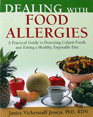
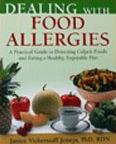
Dealing with Food Allergies: A Practical Guide to Detecting Culprit Foods and Eating a Healthy, Enjoyable Diet
Author
Janice Vickerstaff Joneja, Ph.D.
Publisher
Bull Publishing Company, P.O. Box 1377, Boulder, CO 80306 U.S.A.
www.bullpub.com
ISBN
0-923521-64-X
Date
2003
From the publisher:
Millions of people face allergic reactions to food every day of their lives. A poorly understood, often hidden menace to the health of millions of individuals, allergic reaction to food can be an annoying irritation, a matter of watchful concern, or a life-threatening attack. The ordinary food that you eat can suddenly change from being something that is pleasurable and sustaining into a threat to your well-being, even your life.
DEALING WITH FOOD ALLERGIES approaches the subject with the latest in medical and scientific research in order to help people in gaining an understanding of the physical process and how to approach the treatment options for this hidden danger.
DEALING WITH FOOD ALLERGIES explores the attack on the human body that adverse reactions can bring. It thoroughly describes the effects on the three major organ systems that are the target — the lungs and respiratory tract; the digestive tract; and the skin and mucous membranes. And it guides you through the scientific process of understanding a particular food reaction problem and how it must be analyzed and treated. It provides a basic understanding for those who must be alert to the serious threat to health that some foods present, along with the information and tools required to detect food sensitivities. Reactions can vary widely from simple allergic reaction, like a rash, to the deadly consequences of anaphylactic shock. Working with a qualified health care professional, people with food sensitivities are often the best detectives when it comes to finding the sources of their problem.
DEALING WITH FOOD ALLERGIES offers the sound scientific knowledge and guidance that can lead you through the maze involved in recognizing adverse reactions to foods. Unlike many illnesses, a food allergy is likely to be with you for a lifetime, and it is there, with you, every time you eat, There is nothing more important to those afflicted with a food allergy than to have the facts and know what they mean — only this provides the true basis for careful management, the simple traffic lights of good health.
Chapter 1 – What is Food Sensitivity?
Chapter 2 – Signs and Symptoms of Food Sensitivity
Chapter 3 – Food Allergy
Chapter 4 – Food Intolerance
Chapter 5 – Diagnosis of Food Sensitivities
Chapter 6 – The Allergenic Potential of Foods
Chapter 7 – Cross-Reactivity of Allergens
Chapter 8 – Milk Allergy and Lactose Intolerance
Chapter 9 – Egg Allergy
Chapter 10 – Wheat and Grain Allergy
Chapter 11 – Soy Allergy
Chapter 12 – Peanut Allergy
Chapter 13 – Nut and Seed Allergy
Chapter 14 – Fish and Shellfish Allergy
Chapter 15 – The “Top Ten” Allergens
Chapter 16 – Yeast and Mold Allergy
Chapter 17 – Nickel Allergy
Chapter 18 – Disaccharide Intolerance
Chapter 19 – Biogenic Amines Intolerance: Histamine and Tyramine Sensitivity
Chapter 20 – Salicylate Intolerance
Chapter 21 – Tartrazine Intolerance and Other Artificial Color Intolerance
Chapter 22 – Benzoate Intolerance
Chapter 23 – Sulfite Allergy and Intolerance
Chapter 24 – BHA and BHT Intolerance
Chapter 25 – Nitrite and Nitrate Sensitivity
Chapter 26 – Monosodium Glutamate (MSG) Intolerance
Chapter 27 – Elimination Diets: Elimination Phase
Chapter 28 – Reintroduction of Foods: Challenge Phase
Chapter 29 – The Final Diet
Appendix I – Few Foods Elimination Diet: Recipes and Meal Plans
Appendix II – Sequential Incremental Dose Challenge
Glossary
Index